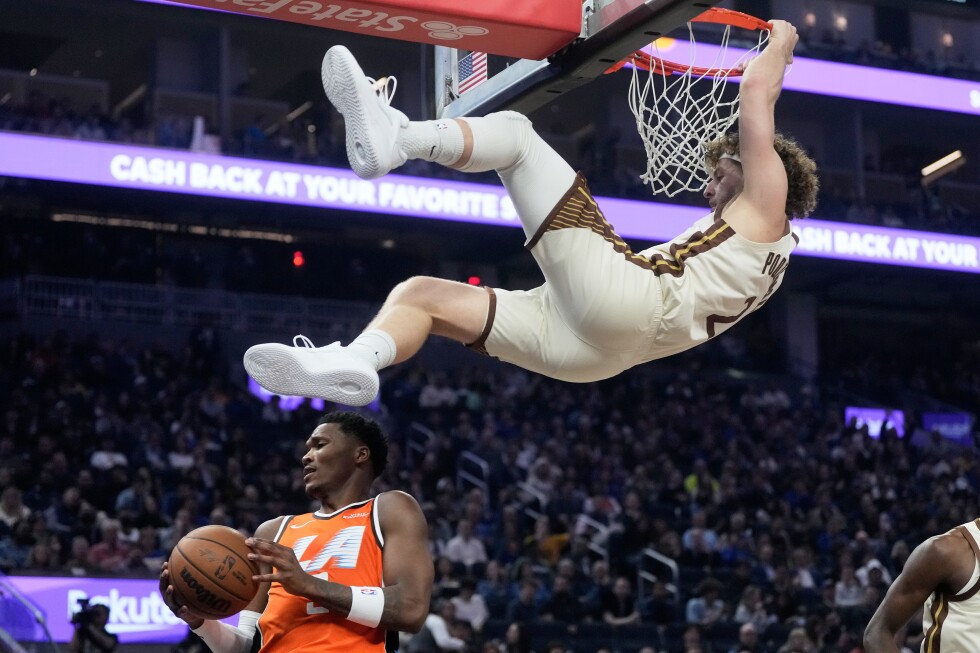
Clippers Bench Electrifies Second Half for Resounding 114-101 Victory Over Warriors
The hardwood drama unfolded on March 2, 2026, as the LA Clippers orchestrated a stunning second-half surge, fueled predominantly by their dynamic bench unit, to overcome a formidable Golden State Warriors squad. In a game that saw significant shifts in momentum, the Clippers ultimately secured a decisive 114-101 victory, marking a pivotal moment in the Western Conference standings. This impressive
Clippers Overcome Warriors 114-101 After Second-Half Surge performance showcased the depth and resilience of the Clippers roster, leaving fans and analysts buzzing about their championship aspirations.
From the outset, the Golden State Warriors, despite facing significant roster challenges, displayed an admirable intensity, establishing a double-digit lead by halftime. Their collective effort and defensive prowess in the opening twenty-four minutes seemed to rattle the Clippers. However, the narrative took a dramatic turn after the intermission. The Clippers' reserves unleashed a relentless wave of energy, scoring, and defensive pressure that systematically dismantled Golden State's advantage, transforming it into a commanding deficit by the final buzzer. This wasn't merely a win; it was a statement about the Clippers' ability to adapt and dominate when the stakes are highest, solidifying a crucial clippers warriors win.
The Unstoppable Second-Half Surge: How the Clippers' Bench Turned the Tide
Basketball is often described as a game of runs, and this matchup was a textbook example. The Warriors' initial dominance was built on sharp execution and a disciplined defensive scheme that stifled the Clippers' primary scorers. However, as the third quarter commenced, a different Clippers team emerged from the locker room – one that was hungrier, more aggressive, and seemingly inexhaustible.
The catalyst for this transformation was undoubtedly the Clippers' bench. While specific individual stats for the Clippers' reserves weren't detailed in the context, their collective impact was undeniable. They brought a fresh burst of athleticism, defensive intensity, and scoring punch that the Warriors, already shorthanded, simply couldn't match. This surge isn't just about scoring; it's about altering the game's rhythm, forcing turnovers, converting fast-break opportunities, and applying constant pressure that wears down the opponent. A strong bench unit ensures that the team's energy level never dips, allowing them to sustain high-level play for all 48 minutes. It's a strategic advantage that allows coaches to rotate players effectively, keeping star players fresh for crucial moments and unleashing unexpected offensive firepower. This tactical masterpiece from the Clippers' coaching staff perfectly leveraged their roster's depth to secure a monumental clippers warriors win.
Golden State's First-Half Promise Fades: A Tale of Two Halves
For the Golden State Warriors, this game was a stark illustration of the challenges faced by teams battling injuries and seeking consistent form. The first half painted a picture of a gritty, determined squad defying expectations. They played with commendable energy, particularly on the defensive end, holding their formidable opponents at bay and building a comfortable double-digit lead. This strong start was crucial, especially considering their position in the standings, as they are actively trying to stave off competitors like the Clippers.
However, the second half saw a significant decline. The Warriors' offense, which had managed to find its rhythm early, sputtered under increased pressure from the Clippers. Shot selections became less efficient, turnovers mounted, and their defensive intensity, while initially impressive, waned as fatigue set in. This collapse is often psychological as much as physical; losing a significant lead can deflate a team, making it harder to execute under duress. For a team already "extremely shorthanded," as noted in the context, maintaining peak performance for an entire game against a deep roster like the Clippers' becomes an arduous task. The evaporation of their lead and subsequent double-digit deficit highlighted the critical need for sustained performance, especially when key players are sidelined.
Key Warrior Performances Under the Spotlight
Assessing individual performances in a loss provides valuable insight into a team's struggles and potential bright spots. For the Warriors, several players delivered mixed bags of performances in this clippers warriors win, with some excelling despite the team's overall outcome, and others struggling to maintain consistency. For a detailed breakdown, see
Warriors vs. Clippers Player Grades: Horford Excels in 114-101 Loss.
Al Horford: A Veteran's Crucial Contribution
Amidst the Warriors' second-half unraveling, veteran big man Al Horford stood out as a beacon of efficiency and reliability. Playing 27 minutes, Horford tallied 17 points, 6 rebounds, and 3 assists, along with a block. His scoring was particularly noteworthy, marking his second-highest total in a Dubs jersey and his third double-digit performance in four games. More impressive was his shooting efficiency, converting 5-for-11 from the field, including 4-for-8 from beyond the arc, resulting in an excellent 64.4% True-shooting percentage.
Horford's contribution was vital, especially given the significant absences of Trayce Jackson-Davis (traded) and Kristaps Porziņģis (played only once). His ability to stretch the floor, rebound, and anchor the defense was paramount in the first half, demonstrating why an experienced veteran can be invaluable to a contending team, especially when depth is tested.
Draymond Green: Energy and Frustration
Draymond Green's performance was a microcosm of the Warriors' game: strong in the first half, faltering in the second. In 31 minutes, Green recorded 4 points, 2 rebounds, and 6 assists. While his defensive effort on Kawhi Leonard was commendable and he brought his characteristic energy, his offensive impact was negligible. Shooting 1-for-5 from both the field and three-point range, coupled with 3 turnovers and 4 fouls, resulted in a low 34.0% TS and the team's worst plus/minus of -18. Green’s dual role as a primary playmaker and defensive anchor demands more offensive consistency, and his struggles to score or pass effectively in the second half hurt the Warriors' ability to mount a counter-attack.
Offensive Struggles: Melton, Moody, and Podziemski's Mixed Bag
Several other Warriors players experienced significant ups and downs. De'Anthony Melton, despite a strong recent run, struggled significantly, managing only 7 points on a dismal 3-for-14 shooting (1-for-7 from three) in 27 minutes, leading to a 25.0% TS. His inability to find his shot or penetrate the Clippers' defense hindered Golden State's offensive flow.
Moses Moody, in 25 minutes, contributed 10 points and 3 rebounds. While his defensive game was strong, his offensive output was inefficient, shooting 4-for-12 from the field and 2-for-8 from deep. The context suggests a need for him to be more aggressive and improve his rebounding, even as he showed improvement in perimeter defensive play.
Brandin Podziemski, however, provided a significant offensive spark. Playing a team-high 37 minutes, he notched 22 points, 7 rebounds, and 3 assists. His extended minutes and production underscore his growing importance to the shorthanded Warriors and highlight a promising individual effort even in a losing cause. These varied performances underscore the Warriors' ongoing search for consistent contributions across their roster.
The Importance of Depth and Sustained Effort
This clippers warriors win was a powerful reminder of several core tenets of professional basketball: the immense value of bench depth, the psychological impact of momentum shifts, and the absolute necessity of sustained effort over a full 48 minutes. For the Clippers, their bench proved to be their ace in the hole, providing the necessary jolt to turn a losing effort into a decisive victory. It’s a testament to good roster construction and effective coaching that ensures every player is ready to contribute.
For the Warriors, the game served as a harsh lesson. While admirable in their first-half resilience, the inability to maintain that level of play, especially against a deep and talented team, exposed vulnerabilities that need addressing. Injuries are an undeniable factor, but the capacity to adapt and perform under pressure, even when shorthanded, is what separates contenders from pretenders. Teams must find ways to manage energy, execute effectively, and prevent mental lapses that allow opponents to erase leads.
Conclusion
The March 2, 2026, clash between the LA Clippers and the Golden State Warriors concluded with a definitive 114-101 clippers warriors win, etching another chapter into their ongoing rivalry. While the Warriors showed flashes of brilliance, particularly in a strong first half, it was the Clippers' bench that ultimately dictated the outcome, leading a breathtaking comeback that showcased their depth, resilience, and tactical advantage. This game underscored the critical importance of a cohesive bench unit in the NBA and offered both teams valuable insights as they continue their respective pushes in the demanding Western Conference season.